

Blood pressure is the pressure of blood within the blood vessels. When the heart contracts and pumps blood into the vessels, the pressure generated is called "systolic pressure." The pressure maintained by the vessels when the heart relaxes is called "diastolic pressure."
Blood is responsible for transporting nutrients and oxygen to tissue cells and removing waste products, carbon dioxide, or secretory products produced by cellular metabolism. Therefore, the velocity and pressure of blood flow are also determined by the metabolic rate of the tissue cells. Normally, the body's blood pressure and heart rate are automatically maintained at a general level to meet basic physiological needs. A sudden increase in blood pressure or acceleration of heart rate is usually to meet the body's emergency needs. For example, during intense exercise, the systolic pressure of normal men and women can soar above 180 (see Figure 3). Another example is during a cold, the blood pressure of a normal person may also rise to 130-140/85-90 mmHg. These instances of elevated blood pressure are temporary and do not constitute hypertension.
Hypertension refers to a state where the arteries are subjected to excessively high pressure over a long and sustained period. Therefore, the measurement standard is a stable value obtained multiple times while at rest.
The World Health Organization defines a resting blood pressure of 120/80 mmHg as standard blood pressure, and anything above 140/90 as hypertension (see Table 1). Some countries have lowered the diagnostic threshold for hypertension to ≥135/85 or ≥130/80, while others have introduced the concept of "prehypertension" (130–139/85–89).
| Systolic Pressure | Diastolic Pressure | 2003 JNC-7 | |
| Ideal Blood Pressure | <120 | <80 | <120/80 |
| Normal Blood Pressure | <130 | <85 | |
| High-Normal | 130~139 | 85~89 | 120~139/or 80~89 |
| Stage 1 (Mild) Hypertension | 140~159 | 90~99 | 140~159/or 90~99 |
| Stage 2 (Moderate) Hypertension | 160~179 | 100~109 | ≧160/or ≧100 |
| Stage 3 (Severe) Hypertension | ≧180 | ≧110 | |
| Isolated Systolic Hypertension | ≧140 | <90 | ≧140/<90 |
2003 ESH-ESC guidelines (J Hypertens 21:1011, 2003)
JNC VII JAMA 2003;289:2560-2572
Table 1: World Health Organization Blood Pressure Standards
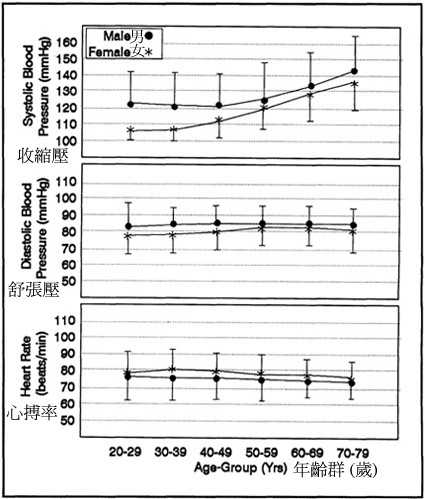
Source: Mayo Clin Proc. 1996;71:445-452
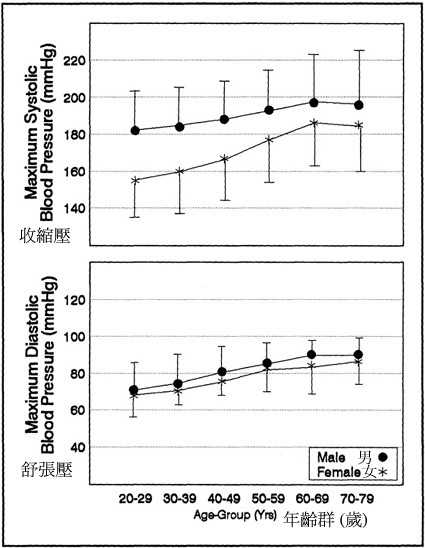
Source: Mayo Clin Proc. 1996;71:445-452
Hypertension is one of the most common chronic diseases globally, with the following characteristics:
- High Prevalence: Over 1 billion people worldwide have hypertension, and the number continues to rise due to an aging population and lifestyle changes.
- Age-Related: Prevalence increases with age, but incidence is also rising among younger populations.
- Geographical Variation: More prevalent in low- and middle-income countries.
- Low Control Rates: Many patients are unaware they have hypertension, or if known, it is poorly controlled.
Classification of Hypertension
Modern medicine classifies hypertension into two main types:- Primary Hypertension: Accounts for about 90-95% of hypertension cases. It results from the interaction of multiple factors. Main risk factors include:
- Genetics: Family history is an important factor.
- Age: Blood vessels age and lose elasticity over time.
- Lifestyle:
- High-Salt Diet: Sodium ions cause water retention, increasing blood volume.
- Obesity: The body requires more blood to supply nutrients, increasing cardiac output.
- Lack of Exercise: Leads to decreased cardiovascular function and weight gain.
- Excessive Alcohol Consumption and Smoking: Alcohol and nicotine damage blood vessels and cause vasoconstriction.
- Stress: Chronic stress can cause hormonal imbalances, raising blood pressure.
- Secondary Hypertension: Hypertension caused by other diseases or reasons. If the underlying cause is cured, the hypertension usually resolves as well. Examples include kidney disease, thyroid tumors, sleep apnea, or the use of certain medications (such as steroids, anti-inflammatory drugs). Additionally, diabetes and hyperlipidemia can accelerate atherosclerosis, indirectly leading to increased blood pressure. Treating this type of hypertension requires addressing its cause, after which blood pressure will naturally return to normal.
This article primarily discusses primary hypertension.
Discoveries of Modern Medicine
The exact cause of primary hypertension is not fully understood by modern medicine. It is considered a complex disease resulting from the interaction of multiple genetic and environmental factors, rather than a single cause. The current consensus is that the occurrence of primary hypertension is the result of dysregulation in multiple physiological systems (see Figure 4).
Source: Shen Yaozi
- Kidneys and Sodium-Water Retention:
This is core to many theories. According to the "pressure-natriuresis mechanism," when blood pressure is normal, the kidneys excrete excess sodium and water. This mechanism is faulty in hypertensive individuals.
Mechanism: The kidneys mistakenly believe the body requires higher blood pressure to excrete sodium, thus over-reabsorbing sodium ions. Sodium retention leads to water retention, increasing total blood volume and cardiac output, thereby raising blood pressure. This also explains why a "high-salt diet" is an important factor. - Overactivation of the Sympathetic Nervous System:
The sympathetic nervous system is responsible for the "fight or flight" response.
Mechanism: Factors like chronic stress, obesity, and sleep apnea can cause excessive sympathetic excitation, leading to:- Vasoconstriction: Increases peripheral vascular resistance.
- Increased Heart Rate and Myocardial Contractility: Increases cardiac output.
- Stimulation of the Kidneys: Reduces sodium excretion and promotes renin release.
- Promotion of Vascular Smooth Muscle Proliferation: Thickens vessel walls, further increasing resistance.
- Overactivation of the Renin-Angiotensin-Aldosterone System (RAAS):
This is a key hormonal system regulating blood pressure and fluid balance.
Mechanism: The release of "renin" by the kidneys initiates a cascade of reactions, ultimately producing "angiotensin II" and "aldosterone".- Angiotensin II: A potent vasoconstrictor, directly increasing peripheral resistance.
- Aldosterone: Promotes sodium and water reabsorption by the kidneys, increasing blood volume.
- Vascular Endothelial Dysfunction:
The vascular endothelium is the layer of cells lining the blood vessels, capable of secreting substances that dilate and constrict vessels.
Mechanism: Under the influence of hypertension risk factors (e.g., oxidative stress, inflammation), endothelial function is impaired.- Decreased secretion of vasodilators (e.g., nitric oxide, NO).
- Increased secretion of vasoconstrictors (e.g., endothelin-1).
- Structural Changes in Blood Vessels:
Long-term exposure to high pressure causes structural adaptations in the vessel walls.
Mechanism: Smooth muscle cells in the vascular media proliferate and hypertrophy, leading to thickened vessel walls and narrowed lumens. This is a vicious cycle: hypertension causes vascular remodeling, and the remodeled vessels further increase peripheral resistance, raising blood pressure even more.
Modern Medical Treatment
Treatment aims not only to lower blood pressure but, more importantly, to protect vital organs like the heart, brain, and kidneys from being "crushed" by long-term high pressure. Treatment involves two aspects: Lifestyle and dietary modifications can treat mild hypertension:- Salt Reduction: Daily sodium intake below 2300 mg (about 6 grams of salt).
- DASH Diet: Increase intake of vegetables, fruits, whole grains, low-fat dairy products; reduce saturated fat and cholesterol.
- Regular Exercise: At least 150 minutes of moderate-intensity aerobic exercise per week (e.g., brisk walking, swimming).
- Weight Control: Maintain a Body Mass Index (BMI) between 18.5 and 24.9.
- Limit Alcohol: Men should not exceed 2 standard drinks per day, women no more than 1.
- Quit Smoking.
- Stress Management.
- Vasodilators: Relax blood vessels.
- Calcium Channel Blockers: Relax blood vessels, slow heart rate.
- Diuretics: Help kidneys excrete excess water and sodium, reducing blood volume.
- Beta-Blockers: Slow heart rate, reduce cardiac output.
The Holistic View of Traditional Chinese Medicine (TCM)
Ancient TCM did not have the disease name "hypertension," but based on its clinical symptoms such as dizziness, headache, palpitations, tinnitus, and stroke, TCM has long had a profound understanding and rich discourse. Modern TCM explains hypertension from the macroscopic perspective of imbalance in the Zang-Fu organs and Qi-Blood, and classifies it by pattern differentiation. The various microscopic mechanisms described by modern medicine remarkably correspond to the pattern differentiations in contemporary TCM.TCM Pattern vs. Modern Medical Mechanisms Correspondence
- "Liver Yang Hyperactivity" → Corresponds to Sympathetic Overactivation / RAAS System Hyperactivity
- Modern Medicine: Manifests as fast heart rate, vasoconstriction, easy tension, strong stress response.
- TCM Perspective: This almost perfectly describes the typical presentation of the "Liver Yang Hyperactivity" pattern. TCM believes the "Liver Governing Free Flow of Qi", regulating Qi dynamics and emotions. Long-term stress and anger damage the Liver, leading to "Liver Qi" stagnation, which over time transforms into fire, scorches Yin fluids, and creates a state where "Liver Yang" is excessively hyperactive and rising.
- Symptom Correspondence: Headache, dizziness, red face and eyes, bitter taste in mouth, irritability, wiry and forceful pulse — these highly overlap with manifestations of sympathetic overexcitation.
- "Phlegm-Dampness Internal Obstruction" → Corresponds to Sodium-Water Retention / Increased Blood Volume
- Modern Medicine: Decreased renal sodium excretion function, accumulation of excess body water.
- TCM Perspective: This belongs to "Phlegm-Dampness Internal Obstruction" or "Water-Dampness Internal Retention". The TCM "Spleen" governs the transformation and transportation of water-dampness. Dietary irregularities (e.g., preference for rich, sweet, fatty, or high-salt foods) damage Spleen and Stomach function. Spleen deficiency leads to abnormal transportation and transformation, preventing normal metabolism of water-dampness, which then accumulates in the body forming "Phlegm-Dampness". When Phlegm-Dampness clouds the clear Yang, it causes dizziness and a feeling of heaviness in the head.
- Symptom Correspondence: Heavy body sensation, obesity, dizziness with a feeling of fogginess, thick greasy tongue coating — commonly seen in hypertension related to metabolic syndrome.
- "Yin Deficiency with Yang Hyperactivity" and "Blood Stasis" → Corresponds to Vascular Endothelial Dysfunction / Vascular Stiffness
- Modern Medicine: Decreased vasodilation capacity, hardened and thickened vessel walls.
- TCM Perspective:
- Yin Deficiency with Yang Hyperactivity: TCM believes "Yin" represents the material basis for moistening and tranquility (analogous to vascular elasticity and endothelial function). Long-term fatigue, aging, or Liver fire can consume Yin fluids, leading to "Yin Deficiency", which fails to check "Yang", resulting in relative "Yang Hyperactivity", manifested as elevated blood pressure accompanied by signs of deficiency-heat.
- Blood Stasis: Qi stagnation, Phlegm-Dampness, or Yin deficiency can all lead to poor blood circulation, forming "Blood Stasis". The thickening, hardening, and plaque formation in vessel walls are seen in TCM as typical "blocked vessels, internal retention of static blood".
- Symptom Correspondence: Dizziness, tinnitus, sore and weak lower back and knees (Yin deficiency), dry mouth, hot palms and soles (deficiency-heat), dark tongue or with petechiae (Blood Stasis).
- "Yin and Yang Deficiency" → Corresponds to Complex and Late-Stage Systemic Effects
- Modern Medicine: Long-term hypertension causes damage to multiple target organs (e.g., heart, kidneys), leading to functional decline.
- TCM Perspective: After prolonged illness, "Yang damage affects Yin, Yin damage affects Yang", ultimately leading to "Yin and Yang Deficiency". At this stage, it's not just a problem of the "Liver" and "Yang", but also involves the "Kidney Yin" that nourishes the whole body and the "Kidney Yang" that provides vitality, both being depleted.
- Symptom Correspondence: Severe dizziness, aversion to cold and cold limbs, sore back, frequent nocturia, palpitations and shortness of breath (impaired heart function), proteinuria (impaired kidney function).
Therefore, TCM treatment of hypertension is not simply about "lowering pressure," but rather, based on different patterns, employs methods such as pacifying the Liver and subduing Yang, nourishing Yin and reducing fire, dispelling dampness and resolving phlegm, and activating blood to resolve stasis. The aim is to restore the body's own balanced state, thereby allowing blood pressure to naturally stabilize. Modern medicine provides the best microscopic footnote for TCM.
This correspondence between TCM and Western medicine also provides a solid theoretical basis for integrated treatment: For example, for a patient with sympathetic excitement of the "Liver Yang Hyperactivity" type, modern medicine might use beta-blockers, while TCM would use formulas like Tianma Gouteng Yin to pacify the Liver and extinguish wind. The two could work synergistically, reducing the dosage and side effects of Western medicine.
| Modern Medical Mechanism | TCM Pattern | TCM Pathomechanism |
|---|---|---|
| Sympathetic / RAAS Activation | Liver Yang Hyperactivity | Liver failing to maintain free coursing, Liver Yang hyperactively rebelling upward |
| Water-Sodium Retention / High Blood Volume | Phlegm-Dampness Internal Obstruction | Spleen failing in transportation, internal generation of Phlegm-Dampness |
| Vascular Dysfunction / Stiffness | Yin Deficiency Yang Hyperactivity / Blood Stasis | Yin fluid depletion, vessels losing moisture; prolonged illness entering the collaterals, internal stasis of static blood |
| Multi-Organ Functional Decline | Yin and Yang Deficiency | Prolonged illness affecting the Kidneys, both Yin and Yang damaged |
Limitations of Modern Medicine
Although modern medicine has identified many microscopic mechanisms, it cannot yet explain everything at the macroscopic level; otherwise, lifelong medication control wouldn't be necessary. It's like seeing the intricate structure of a few snowflakes but being unable to depict the winter snowscape based on that.
Modern Medicine: The Science of Analyzing "Snowflakes"
Modern medicine adopts a reductionist methodology, striving to break down the human body into its smallest units (genes, molecules, ion channels, neural pathways) to find the root of problems. In the case of primary hypertension, it has successfully discovered:- The "snowflake" of the RAAS system
- The "snowflake" of the sympathetic nervous system
- The "snowflake" of sodium-water retention
- The "snowflake" of endothelial function
Its limitation lies in: It tells us the crystal structure of each snowflake, but cannot fully explain:
- Why is it snowing? (Why do this person's systems become dysregulated as a whole?)
- Why do the snowflakes combine in this unique way? (Why does Mr. A's hypertension primarily involve sympathetic excitement, while Ms. B's primarily involves sodium-water retention?)
- What is the relationship between this snowfall and the entire ecosystem (the person's overall state)? (The intrinsic connection between high blood pressure and emotions, energy, sleep, digestion)
Behind Lifelong Medication: Treating the "Effect" Rather Than Fundamentally Changing the "Cause"
The treatment model of modern medicine is largely about "control" rather than "cure."It uses drugs to artificially "adjust" the body's regulatory switches (e.g., forcibly dilating blood vessels, forcibly excreting water and sodium), but it does not fundamentally change the individual's constitution and lifestyle (genetic susceptibility, chronic stress, dietary habits, obesity, etc.) that caused these switches to malfunction.
Once medication is stopped, the body returns to its original imbalance set point, and blood pressure rises again. Therefore, taking medication is like bailing water out of a constantly leaking container every day, rather than repairing the cracks in the container.
TCM's Holistic View: The Art of Depicting the "Snowscape"
TCM's focus is precisely on the macroscopic "winter snowscape."It does not fixate on the specific structure of each snowflake but pays attention to the climate, environment, and energy state of the entire landscape (i.e., the overall balance of the person).
Patterns like "Liver Yang Hyperactivity," "Phlegm-Dampness Internal Obstruction," and "Yin Deficiency with Yang Hyperactivity" describe the internal climatic state of the human body's "microcosm." The goal of treatment is to change this internal "climate" through Chinese herbs, acupuncture, diet, and lifestyle adjustments — for example, shifting from "stormy weather" (Liver Yang Hyperactivity) to "calm and sunny weather" (Yin-Yang harmony). Once the climate is adjusted, the "tendency" to snow naturally stops.
Therefore, in theory, when the body's fundamental balance is restored, stable blood pressure is a natural outcome, and lifelong reliance on medication control is no longer necessary.
Conclusion: The Complementarity of the Two Perspectives
Modern medicine explains "how hypertension happens" through microscopic physiological and biochemical indicators; while TCM, through macroscopic pattern differentiation and treatment, describes "what kind of imbalanced state a hypertensive patient's body is in." The two approaches from different angles arrive at conclusions that are nearly identical and mutually verifiable.Modern medicine provides powerful, emergency, targeted tools (drugs) that ensure life safety and prevent complications, but it has limitations regarding the holistic and root-cause treatment of complex chronic diseases.
TCM's holistic view provides a framework and philosophy for understanding the overall imbalance of the human body, aiming to fundamentally adjust the constitution. However, its effects are often slower, and it requires the support of modern medicine in acute and severe cases.
The ideal state might be to combine the two:
- Use the "microscopic lens" of modern medicine for precise diagnosis, controlling risk indicators, and handling emergencies.
- Use the "wide-angle lens" of TCM to understand the root causes of overall imbalance, and through lifestyle, diet, emotional regulation, and traditional therapies, fundamentally change the "internal environment" that leads to disease, thereby reducing dependence on medication and achieving higher quality health.